
For bureaux and consultants
Forty clients. One standard.
You are not paid to notice that a bill looks high. You are paid to prove which line is wrong, by how much, against what the industry published. Here is the morning that takes.
01
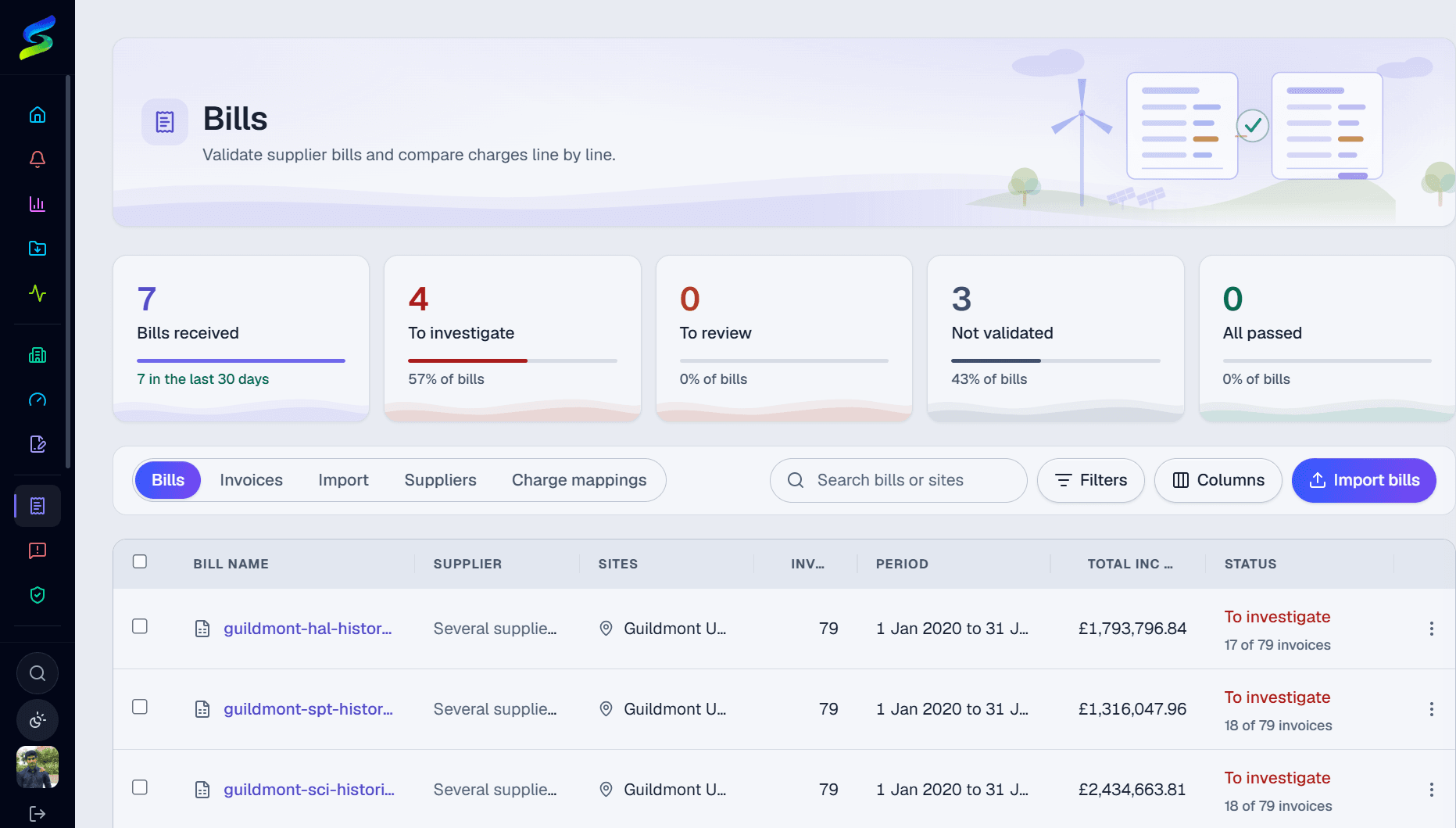
Open the queue, not the inbox.
Every client organisation you hold, in one list, sorted by what actually needs a decision. Bills that failed, bills held for a rate that has not settled yet, and queries the supplier has not answered. The estate you are not working on today stays out of the way.
02
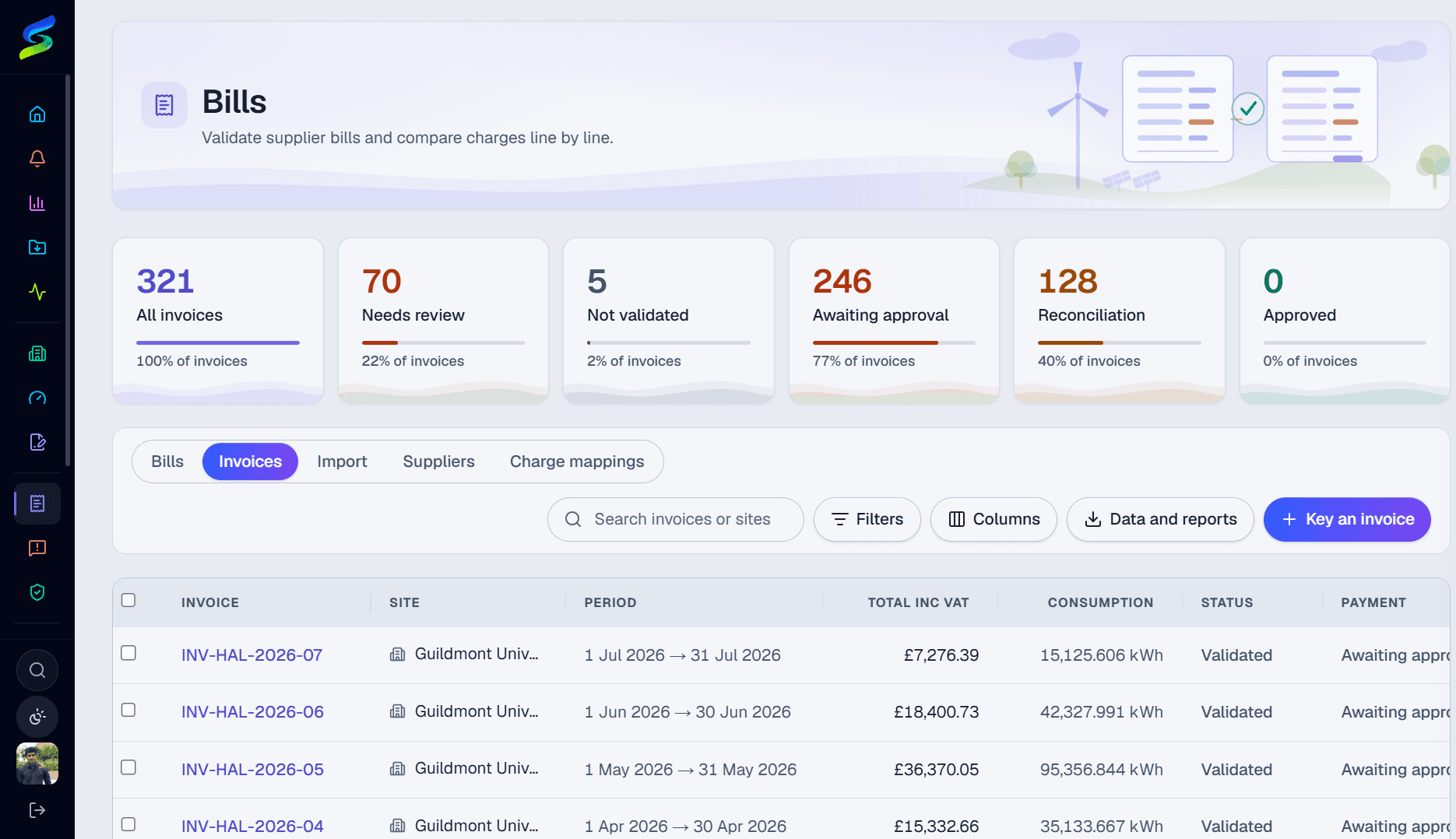
The invoice is already rebuilt when you open it.
Not flagged, not scored: rebuilt. Every line recomputed from the contract, the meter data and the published industry charge in force on that date, then compared to what the supplier billed. 35 charge types across power, gas and water, including the network and policy lines most validation quietly passes through.
03
The query goes out with the arithmetic attached.
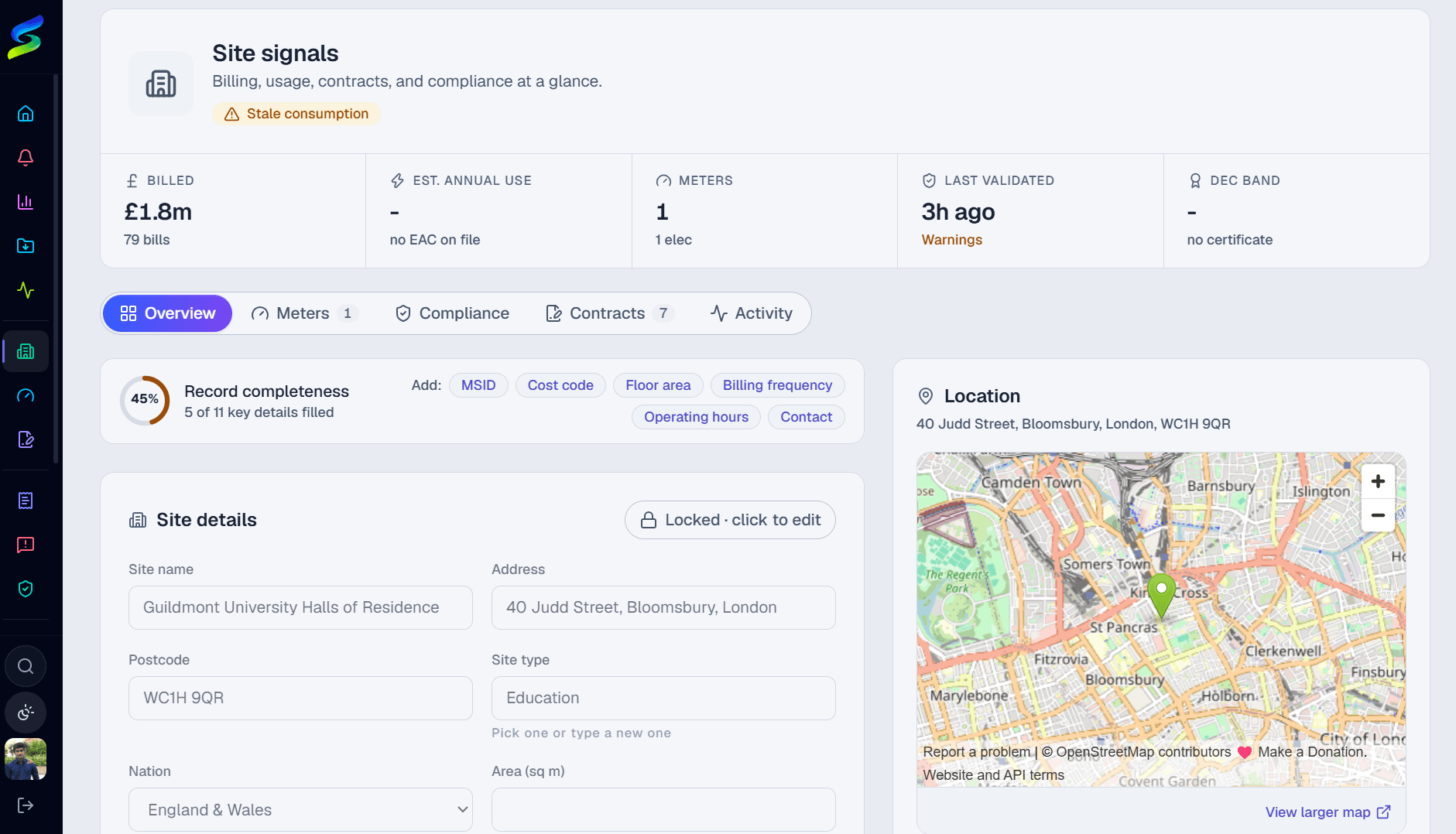
A supplier argues with an assertion and settles with a calculation. The distribution charges are priced from that client's own distributor's published Schedule of Charges, across all 14 GB distribution networks, on the meter's own profile class and agreed capacity, so the query names the rate, the date and the source it came from.
04
The run is the evidence, and it is kept.
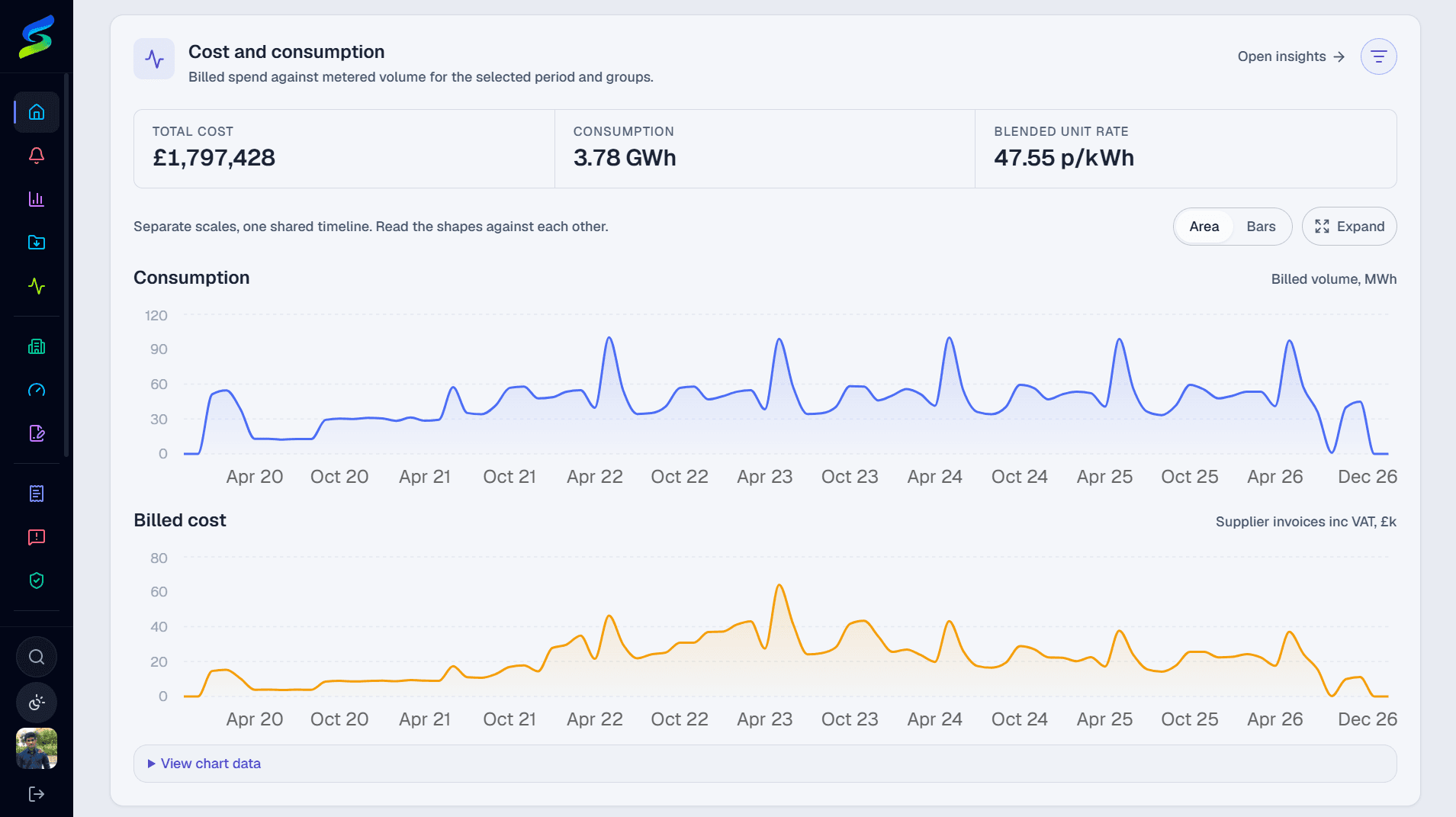
Validation is append-only. Re-running a bill writes a new run rather than overwriting the last one, so the position you took in March is still readable in September, with the rates that were in force when you took it. That is the difference between a working file and an audit trail.
Running it across a book of clients
The parts that only matter once there is more than one.
- One tolerance does not fit forty clients
- Pass and warn bands, and the materiality floor beneath which a difference is not worth a query, are set per organisation and can be overridden down to a single site or a single meter. The meter override wins, field by field.
- Each client sees their own estate and no one else's
- Separation is enforced in the database by row-level security rather than by a filter in the application, so a client portal cannot be made to show a neighbour's data by editing a URL.
- The rules travel with the client, not with you
- Which checks fail, which only warn, and which are switched off are properties of the organisation. An analyst picking up an unfamiliar client inherits the standard already agreed with them.
Bring a client bill you already queried.
The useful test is one you know the answer to. Send an invoice you have already worked, and we will rebuild it and show you what the engine found and what it could not settle.